


Why Your Reglazed Bathtub Is Peeling or Chipping (Causes and Fixes)
A reglazed bathtub that peels or chips within a year or two points to one thing: the job was done incorrectly. Professional bathtub reglazing, executed with proper surface preparation, industrial-grade coatings, and adequate curing time, lasts 10 to 15 years. Tub Coaters has served Baltimore, Nottingham, MD, and Washington, DC for over 26 years, completing more than 130,000 projects with MHIC license #97786, general liability insurance, and workers compensation coverage. Homeowners across the region trust our work because our coatings hold up. Browse our reviews on the Better Business Bureau, Yelp, Angi, and Houzz to see what properly executed reglazing looks and performs like long-term. This blog explains exactly why tub reglazing fails, how to identify the warning signs early, and what a permanent professional fix involves.
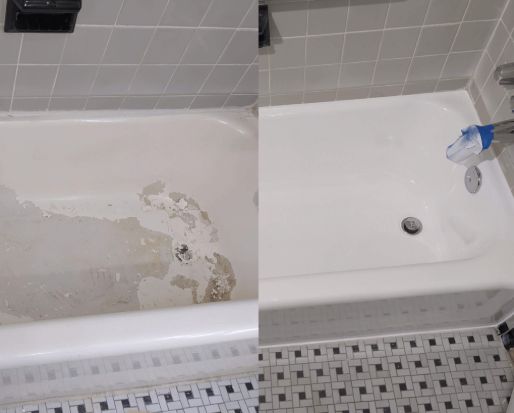
What Does Reglazing Peeling Actually Mean?
Peeling reglazing refers to the protective coating applied to the tub surface separating from the underlying substrate. A properly applied coating bonds chemically and mechanically to the tub material, whether porcelain, fiberglass, acrylic, or cast iron. Once that bond fails, the topcoat starts lifting, cracking, or flaking in sheets.
This is not normal aging. A well-applied coating does not peel. It gradually dulls and loses gloss over many years of use. Sudden or early peeling indicates an application failure, not a product failure. The cause almost always traces back to one of three problems: inadequate surface preparation, incompatible coating materials, or improper curing conditions.
Chipping presents a different issue. Some chipping results from impact damage such as dropped shampoo bottles or metal fixtures striking the surface. Other chipping, particularly along the tub rim or near the drain, signals adhesion failure beneath the surface. Understanding which failure type you have determines the correct repair approach.
The Real Causes of Reglazed Tub Peeling and Chipping
Tub reglazing failure does not happen randomly. Specific causes produce predictable failure patterns. Knowing the cause tells you what went wrong and what the repair must address.
Incomplete or Rushed Surface Preparation
Surface preparation is the single most important step in any reglazing job. The tub must be stripped of all soap scum, body oils, hard water deposits, cleaning product residue, and any previous coatings. The surface then requires mechanical abrasion or chemical etching to create a profile the new coating can grip.
A contractor who skips steps or rushes preparation to save time leaves the coating with nothing to bond to. Peeling typically begins at the waterline, around the drain, or at tub edges within six to eighteen months of such a rushed application.
Incompatible or Consumer-Grade Coating Materials
Professional reglazing uses two-part urethane or polymer systems requiring proper mixing ratios and professional HVLP spray equipment. Consumer-grade products from hardware stores use single-component formulas that cannot achieve the same adhesion strength or durability.
Some contractors use inferior materials that appear professional but lack the technical specifications required for long-term bathroom applications. These products may look fine for the first few months, then fail rapidly as water exposure, temperature cycling, and cleaning chemicals degrade the film.
Improper Mixing Ratios in Two-Part Systems
Two-part coating systems require precise catalyst-to-base ratios. An off-ratio mix compromises the curing chemistry, producing coatings that never achieve full hardness. These under-cured films remain slightly soft and gradually peel under normal bathroom use.
Inadequate Curing Conditions
Reglazing coatings require specific temperature and humidity ranges during application and curing. Applying coatings in a bathroom with high ambient humidity, low temperatures, or insufficient ventilation interrupts the curing reaction. Moisture contamination during curing produces films that look complete but have weak internal cross-linking. These fail early and predictably.
Previous Failed Coatings Not Fully Removed
Applying new reglazing over a failing old coating is a common shortcut with predictable consequences. The new coating may adhere temporarily to the old material, but the underlying bond failure continues to propagate. The new coating peels along with the old one. Any professional reglazing job on a previously reglazed tub must include complete removal of all existing coatings before new material is applied.
Warning Signs Your Reglazed Tub Coating Is Starting to Fail
Catching failure early prevents water damage and substrate deterioration. These signs indicate your reglazed coating is losing its bond:
- Small bubbles or blisters appearing under the coating surface, especially near the drain or overflow plate
- Edges of the coating lifting along the tub rim, caulk lines, or where the tub meets the wall
- Chalky or powdery surface residue appearing after cleaning
- Visible yellowing or discoloration in isolated patches rather than uniform aging across the surface
- Flaking or peeling strips pulling away from the tub bottom or sides
- Hairline cracks in the coating appearing in a web or map pattern, indicating under-curing
- Soft or spongy spots where the coating flexes underfoot in a shower floor or tub bottom
- Water staining appearing beneath lifted sections, indicating moisture has already penetrated below the coating
Any one of these signs warrants a professional assessment. Two or more occurring together indicates active coating failure requiring immediate attention. Continued use accelerates damage and can expose the tub substrate to water penetration, rust formation on cast iron, or delamination on fiberglass. Our guide on common tub reglazing issues and how to fix them covers additional failure patterns worth reviewing.
DIY Patch Kits vs Professional Reglazing: What Actually Works
Hardware store tub repair kits appeal to homeowners who want a fast, low-cost solution. These products do deliver some value for isolated chip repairs on an otherwise sound coating. They cannot solve systemic adhesion failure or widespread peeling.
Where DIY Kits Fall Short
- Consumer-grade materials cannot match the adhesion strength of two-part professional systems
- Color matching is limited to standard white or off-white, leaving visible patches on tinted tubs
- Surface preparation requires the same thoroughness as professional work, which most DIY users skip
- Repairs applied over active peeling areas will fail again because the underlying bond failure continues
- DIY fumes pose real exposure risks without professional ventilation equipment in place
Our guide to the health risks of DIY bathtub refinishing details additional concerns around vapor exposure when using coating products without proper ventilation systems.
When Professional Reglazing Is the Right Solution
- Peeling covers more than a few square inches of the tub surface
- The tub was previously reglazed and the coating failed within a short timeframe
- Cracks or chips expose the underlying substrate to moisture
- Color matching matters for the bathroom appearance
- You need a durable, long-term result rather than a temporary cosmetic patch
For existing chip damage that has not yet progressed to systemic peeling, professional bathtub crack and chip repair can address isolated damage points before full reglazing becomes necessary.
How Professional Reglazing Fixes Peeling Permanently
The correct repair for a peeling reglazed tub begins with complete removal of all failing coatings before any new material is applied. This single step separates permanent repairs from temporary patches. Here is what a proper professional bathtub refinishing and reglazing service includes when addressing a previously failed reglazing:
- Complete coating assessment: The technician inspects the entire surface to identify all areas of adhesion failure, not just the visible peeling zones.
- Full coating removal: All existing reglaze material is stripped from the tub down to the original substrate. No shortcuts are acceptable at this step.
- Substrate inspection and repair: Once the original surface is exposed, any chips, cracks, rust, or substrate damage receives proper repair using materials compatible with the tub composition.
- Thorough surface preparation: Complete degreasing, mineral deposit removal, and mechanical abrasion or etching creates a clean, profiled surface ready for coating adhesion.
- Professional primer application: Substrate-specific bonding primer applies in multiple thin coats, creating the chemical anchor for the topcoat system.
- Topcoat application with HVLP equipment: Multiple thin topcoat layers build proper film thickness using a professional spray system, not a brush or roller.
- Controlled curing: The bathroom maintains appropriate temperature and humidity through the full curing period to develop maximum coating hardness and chemical resistance.
Learn more about what a complete process includes in our detailed overview of how long the bathtub refinishing process takes from start to finish.
Why Baltimore, Nottingham, and DC Homeowners Face This Problem More Often
The Baltimore-Washington DC metro area creates specific conditions that expose inferior reglazing work faster than many other markets.
Hard water and mineral deposits from municipal water supplies in Baltimore County, Prince George’s County, and Montgomery County accelerate surface deterioration on poorly bonded coatings. Hard water scale builds up rapidly, and the cleaning products homeowners use to remove it are aggressive enough to degrade under-cured or inadequately bonded films.
Humidity cycling from the region’s hot, humid summers and cold, dry winters creates significant thermal and moisture stress on bathroom surfaces. Well-bonded professional coatings flex and contract with these cycles without losing adhesion. Poorly bonded coatings develop micro-cracks that expand into visible failure within one to two seasons.
The older housing stock throughout Baltimore City, DC neighborhoods, and surrounding suburbs contains aging cast iron and porcelain tubs that require specialized surface preparation techniques. Contractors who lack experience with period fixtures often apply coatings using techniques better suited to modern fiberglass, producing adhesion failure on vintage materials. Tub Coaters serves Baltimore, Nottingham, Washington, DC, and Northern Virginia with experience in every housing era and material type found across the region.
When to Call Tub Coaters About Your Peeling Reglazed Bathtub
Call as soon as you notice any of the warning signs described in this guide. Early intervention prevents moisture from penetrating the tub substrate and causing damage that extends well beyond the coating itself. A leaking or water-damaged tub substrate represents a significantly more expensive repair than a coating failure caught while still contained to the surface.
Tub Coaters has completed full coating removal and professional refinishing on hundreds of previously failed reglazing jobs throughout the Baltimore-DC region. Our professional bathtub refinishing and reglazing service uses industrial-grade two-part coating systems, complete surface preparation protocols, and professional HVLP application equipment designed to produce results that last.
Homeowners whose tubs are fiberglass and experienced a previous failed job should know that fiberglass bathtub refinishing requires flexible coating formulations specifically designed for the material. Applying rigid coatings to fiberglass produces the same premature failure pattern many homeowners experience after working with inexperienced contractors. Our flexible formulation approach eliminates this failure mode.
Our experts are also familiar with how long reglazing results should last and what maintenance practices protect that lifespan. You deserve a reglazing result that performs as promised.
Why Baltimore, Nottingham, and DC Homeowners Choose Tub Coaters
| What We Offer | What It Means for You |
| Licensed MHIC#97786 by the Maryland Home Improvement Commission | Your project is protected by verified, state-certified expertise |
| Fully Insured (General Liability + Workers Compensation) | Zero liability for you if anything goes wrong on site |
| BBB Accredited Business | Third-party verified track record of customer satisfaction |
| 26+ Years Serving Baltimore, MD, and Washington, DC | Deep local knowledge and a proven regional reputation |
| 130,000+ Successfully Completed Projects | Experience across every tub type, material, and failure scenario |
| Industrial-Grade Two-Part Coating Systems | Professional materials that bond permanently, not consumer-grade products |
| Complete Coating Removal Before Re-Reglazing | No shortcuts on previously failed jobs, guaranteed |
| Available 24/7 for Consultations and Urgent Assessments | We respond when it matters most, any time of day or night |
FAQs About Why Your Reglazed Bathtub Is Peeling or Chipping
How long should a professional reglazing job last?
A professionally applied reglazing job using industrial-grade two-part coatings lasts 10 to 15 years with proper care. Longevity depends on surface preparation quality, coating materials, curing conditions during application, and homeowner maintenance practices. Jobs that peel within one to three years indicate application failure, not normal product lifespan. Follow the maintenance guidelines provided by your refinishing company to protect your investment.
Is it normal for reglazing to peel within a year?
No. Peeling within the first year is not normal and indicates a failed application. Proper reglazing bonds chemically and mechanically to the tub substrate. Early peeling results from incomplete surface preparation, incompatible coating materials, improper mixing ratios, or inadequate curing conditions. Any contractor who dismisses early peeling as normal wear is incorrect.
Can I apply new reglazing over peeling old reglazing?
Applying new reglazing directly over peeling material produces the same failure pattern again. The new coating may look good initially but will peel along with the old material beneath it. Permanent repair requires complete removal of all failing coatings before any new material is applied. This step cannot be skipped for a lasting result.
What causes the coating to peel near the drain specifically?
The drain area sees the highest water concentration, temperature extremes, and physical contact during daily use. This makes it the most demanding zone for coating adhesion. Peeling that starts near the drain points to inadequate surface preparation in that area, incomplete removal of soap scum and mineral deposits, or coating applied too thinly in the drainage zone.
How do I know if my tub needs reglazing or just a patch repair?
Isolated chips or small cracks in an otherwise well-adhered coating can often be addressed with professional crack and chip repair without full reglazing. However, if peeling covers more than a few square inches, if multiple areas are affected simultaneously, or if lifting occurs along edges and seams, full reglazing is the appropriate repair. A professional on-site assessment gives you a definitive recommendation for your specific situation.
Does hard water in Baltimore and DC cause reglazing to peel faster?
Hard water and mineral deposits accelerate failure in poorly bonded coatings. The aggressive cleaning products homeowners use to remove hard water scale can degrade under-cured or inadequately bonded films. Professionally applied and fully cured coatings resist these cleaning products without issue. The connection between hard water and peeling is indirect: it is the cleaning response to mineral deposits that stresses weak coatings, not the water alone.
Can a fiberglass tub be reglazed after a previous job failed?
Yes, with complete removal of all previous coating material and application of flexible coating formulations specifically designed for fiberglass substrates. Fiberglass tubs flex slightly with temperature changes. Rigid coatings applied without flexible additives crack and peel on fiberglass regardless of preparation quality. If a previous contractor used standard rigid coatings on your fiberglass tub, early failure is predictable.
How long does the reglaze removal and re-reglazing process take?
Removing previous failed coatings adds time to the preparation phase but does not dramatically extend the overall project timeline. Most residential re-reglazing jobs complete in six to eight hours from arrival to completion. Surfaces require 24 to 48 hours before use during curing. The total timeline is comparable to a standard first-time refinishing job, though preparation takes longer.
What cleaning products are safe on a freshly reglazed tub?
Use mild liquid cleaners and soft cloths or non-scratch sponges for routine cleaning. Avoid abrasive powder cleansers, scrub brushes, or cleaning products containing bleach or strong solvents used extensively. These do not damage a fully cured professional coating with brief contact, but prolonged exposure can degrade the film over time and shorten overall coating lifespan.
Does reglazing peeling mean the tub needs to be replaced?
Reglazing peeling does not indicate tub replacement is necessary. The underlying tub substrate remains structurally sound in nearly all peeling cases. The coating has failed, not the tub itself. Complete coating removal and proper re-reglazing restores full function and appearance without fixture replacement. Replacement is only warranted when the tub substrate itself has structural damage, not surface coating failure.
Why did my reglazed tub chip so easily at the edges?
Tub rim and edge chipping often indicates coating applied too thinly in those areas, which is a common application shortcut. Edges require careful attention during application to achieve adequate film thickness. Thick enough coatings resist impact chipping that thinner films cannot withstand. Edge chipping can also result from dropped accessories during use, which is a separate issue from adhesion failure.
How do I prevent a new reglazing job from peeling?
Ask the contractor explicitly about their surface preparation process, the specific coating system they use, mixing ratios, and curing protocols. Request that complete removal of any existing coatings occurs before new material is applied. Verify MHIC licensing and check reviews that specifically mention long-term durability. After the job, follow the maintenance guidelines provided using only approved cleaning products.
Can reglazing be removed and redone more than once?
Yes. A tub can be reglazed multiple times over its lifetime. Each reglazing cycle requires complete removal of the previous coating before new material is applied. This removal process, done correctly, does not damage the underlying tub substrate. Cast iron tubs in particular have been successfully reglazed multiple times over decades of use with proper professional technique.
Does peeling reglazing allow water damage to the wall behind the tub?
Peeling coating along the tub surround, tub rim, or caulk lines creates pathways for water to penetrate behind the tub enclosure. Over time, water intrusion damages wall substrates, causes mold growth, and deteriorates the subfloor. Early intervention when peeling first appears prevents a coating problem from becoming a structural water damage problem requiring far more extensive and expensive repairs.
How do I find a trustworthy reglazing company in Baltimore or DC after a bad experience?
Verify MHIC licensing through the Maryland Home Improvement Commission, check BBB accreditation and rating, and read reviews specifically mentioning whether the coating held up well years after the job. Ask direct questions about surface preparation procedures and the specific coating system the company uses. Any contractor who cannot explain their preparation process in specific terms should not be hired. Tub Coaters has maintained BBB accreditation and MHIC licensing throughout our 26+ year history serving Baltimore and DC.
Get a Permanent Fix for Your Peeling Reglazed Bathtub
Your reglazed bathtub deserves a fix that actually holds. Tub Coaters provides professional bathtub refinishing and reglazing services throughout Baltimore, Nottingham, MD, and Washington, DC, backed by 26+ years of experience, MHIC license #97786, general liability insurance, and workers compensation coverage. Our process includes complete removal of all failing coatings, surface preparation to professional standards, and industrial-grade two-part systems that bond permanently to every tub material. Read what customers say about our long-term results on Yelp, Trustpilot, and Facebook. Call (410) 324-6057 today to schedule your professional assessment and get a coating that holds for 10 to 15 years.