


Chipped, Stained, or Rust-Ringed Porcelain Sink? How Reglazing Restores It
Yes, a chipped, stained, or rust-ringed porcelain sink can usually be restored by reglazing, without replacing the sink, touching the plumbing, or cutting the countertop. Tub Coaters is MHIC-licensed (#97786, verifiable with the Maryland Home Improvement Commission), fully insured, and backed by 26+ years and 130,000+ completed projects across Baltimore, Nottingham, and Washington, D.C. Our technicians clean, repair, and recoat the sink right where it sits, usually in one visit. See verified reviews on the Better Business Bureau, Yelp, Angi, and Houzz, and call (410) 324-6057 any time, 24/7.
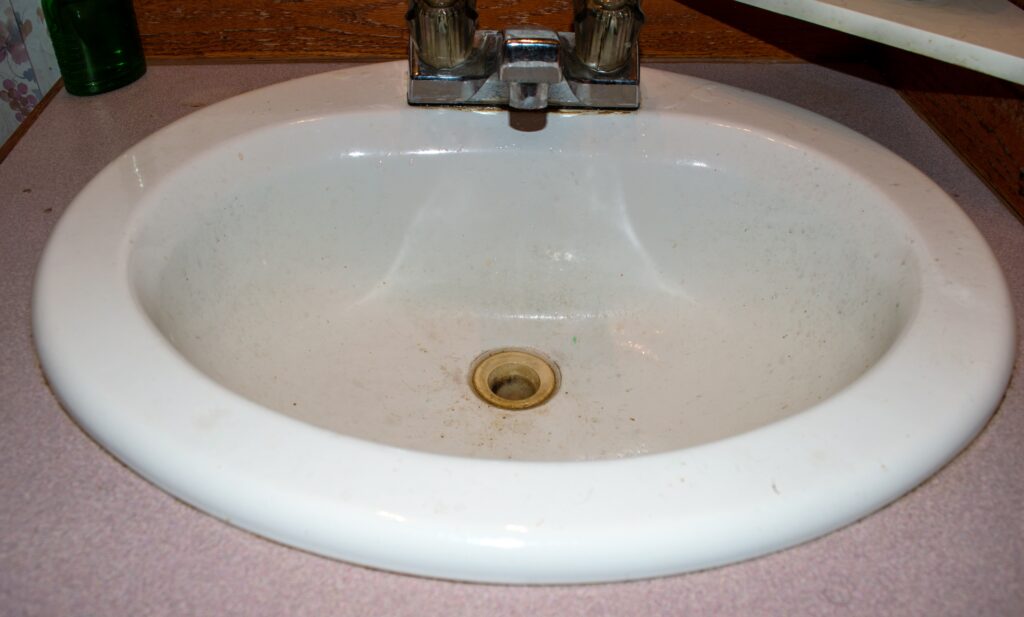
What Is a Chipped, Stained, or Rust-Ringed Porcelain Sink?
A porcelain sink is either porcelain enamel over metal or solid vitreous china. Porcelain enamel is a glass-like coating fused at high temperature onto cast iron or steel, and it is common on older kitchen sinks with built-in drainboards, wall-hung bathroom sinks, and utility sinks. Vitreous china is a fired ceramic with a glaze, and it is common on pedestal and many vanity-top bathroom sinks.
The difference decides what a chip means. A chip in enamel exposes bare metal, which can rust. A chip in vitreous china exposes porous ceramic, which can stain but cannot rust.
| Feature | Porcelain Enamel Over Metal | Vitreous China |
|---|---|---|
| Body | Cast iron or steel | Solid fired ceramic |
| What a chip exposes | Dark metal that can rust | White ceramic that can stain but cannot rust |
| Magnet test | A magnet sticks | A magnet does not stick |
| Common in | Older kitchen, wall-hung, and utility sinks | Pedestal and many vanity-top sinks |
Three problems account for most porcelain sink complaints:
- Chips: missing enamel or glaze, usually at the rim, drain, overflow, or faucet holes.
- Stains: discoloration that returns after cleaning, caused by minerals, iron, dyes, or a worn surface.
- Rust rings: orange-brown halos around a chip, a drain, or a spot where a metal item sat on the enamel.
Reglazing handles all three because it rebuilds the surface instead of cleaning it.
What Causes Porcelain Sink Chips, Stains, and Rust Rings?
Impact and Hardware Stress
Porcelain enamel is hard but brittle. It resists scratches, yet a dropped hair dryer, a glass bottle, or a heavy pot can chip it. Chips cluster where the enamel is thinnest or under stress: the rim, the drain opening, the overflow, and the faucet holes.
Exposed Metal and Rust
Once a chip exposes cast iron or steel, moisture and air turn the metal to rust. The rust stains the surrounding enamel and can creep beneath the edge of the chip, lifting more enamel over time. That is why a small chip with a rust ring tends to grow, and it is the same process behind rust spots in Baltimore cast iron bathtubs.
Minerals, Iron, and Dyes in Everyday Use
Tap water carries dissolved minerals that leave a dull film, and iron in the water or in older supply pipes can leave orange stains. Hair dye, coffee, and tea add color to any rough spot. Every community water system publishes an annual water quality report, and the EPA explains how to read yours in its Consumer Confidence Report guide.
Cleaner Damage and Wear
Abrasive powders and scrub pads leave micro-scratches, and harsh acidic cleaners can etch the glaze. The roughened surface holds soil, so the sink looks dirty minutes after cleaning. Kitchen sinks also collect gray metal marks from pots and pans.
Warning Signs a Porcelain Sink Needs Restoration
- A chip at the drain, overflow, rim, or faucet hole
- An orange-brown halo around a chip that returns after cleaning
- Rough, gritty, or dull enamel where the surface used to be glossy
- Fine crazing lines that trap dirt
- Stains that return within days of cleaning
- Enamel that flakes or lifts near the edge of a chip
Most of these signs are surface problems, and surface problems respond well to reglazing. A crack through the sink body or a leak is a different matter, and the technician says so during the assessment.
DIY vs. Professional: What Homeowners Can Handle
Routine care sits squarely with the homeowner. A mild, non-abrasive cleaner and a soft cloth handle daily soil, and a quick rinse after use keeps minerals from building up. Coating work is where results diverge.
| Situation | DIY Option | Professional Reglazing |
|---|---|---|
| Light surface staining | Non-abrasive cleaner and a soft cloth | Not needed |
| Small chip, no rust | A touch-up kit can cover it for a time | Chip filled, blended, and sealed under a new coating |
| Chip with rust | Rust often returns beneath the patch | Rust treated, chip repaired, surface recoated |
| Dull, rough, or widely stained enamel | More scrubbing wears the glaze further | Full-surface recoat restores gloss |
| Kitchen sink with heavy daily use | Consumer kits often struggle with heat and chemicals | Coating systems formulated for kitchen demands |
Full DIY refinishing kits require chemical etching, strong ventilation, and careful spraying. Poor adhesion shows up as peeling within months, and a failed coating must be stripped before a professional can recoat the sink.
How Professional Reglazing Restores a Porcelain Sink
Professional sink and countertop refinishing rebuilds the surface in place, so the faucet, drain, plumbing, and countertop stay untouched. Most residential sinks finish in one visit. The process follows six steps.
- Assess the sink. The technician identifies the material (the magnet test settles it), checks for chips and rust, and confirms that refinishing is the right fit.
- Protect the surroundings. Faucets, drains, countertops, and backsplashes are masked, and ventilation equipment goes in place following EPA indoor air quality guidance.
- Clean and treat. Commercial-strength cleaners remove soap scum, minerals, and oils. Rust at chips is treated, and loose enamel is removed.
- Repair and etch. Chips are filled with compatible filler, sanded smooth, and feathered into the surrounding surface. The glossy porcelain is then etched so the coating can grip.
- Prime and coat. A bonding primer and a commercial-grade topcoat go on in thin layers with professional spray equipment. Kitchen sinks receive coating systems made for heat and chemical exposure.
- Cure and walk through. The sink is ready for light use in 24 hours and full use in 48 hours. The technician reviews care instructions before leaving.
Customers who also want the tub updated can schedule the sink and bathtub refinishing and reglazing in the same visit, so the finishes match.
Not sure whether your sink can be saved? Call (410) 324-6057 for a free estimate. Our team answers 24/7.
Reglazing vs. Replacement
| Professional Reglazing | Full Replacement |
|---|---|
| Completes in a single visit, usually within a day | Often takes days once plumbing and countertop work are included |
| Plumbing and faucet stay connected | Supply lines, drain, and faucet are disconnected and reinstalled |
| Countertop and backsplash stay untouched | Countertop seals or cutouts can be damaged or reworked, especially with older sinks that do not match modern sizes |
| Original sink style and size preserved | Matching an older style or size can be difficult |
| No demolition debris | The old sink must be removed and hauled away, and cast iron sinks are heavy |
| Sink usable again in 24 to 48 hours | Sink out of service until installation is complete |
Pros and Limits of Reglazing
- Pros: no plumbing disconnection, no countertop damage, the original sink style and size preserved, and a finish that is ready in 24 to 48 hours.
- Limits: reglazing restores the surface, not the structure. Hairline surface cracks can be filled and sealed, but a crack through the sink body, a leak at a seam, or metal that has rusted through points to replacement.
- Care: A reglazed sink needs non-abrasive cleaners. Scouring powders and steel wool shorten the life of the coating.
When the Sink Is Part of a Counter
If your sink sits in a laminate or tile counter, kitchen countertop refinishing can bring the counter and sink to one finish. If it is part of a cultured marble top, bath vanity top refinishing covers the whole unit, and our guide to cracks near the sink bowl explains why that material fails where it does.
Local Context: Porcelain Sinks in Baltimore and Washington, D.C. Homes
Baltimore and Washington, D.C. have large neighborhoods of rowhouses and mid-century homes where original enameled sinks are still in daily use: kitchen sinks with drainboards, wall-hung bathroom sinks, and utility sinks in basements and laundry rooms. Those fixtures were built to last, which is why restoring them often makes more sense than replacing them.
Water plays a part as well. Homes with older iron supply pipes can show rust-colored stains no matter how carefully a sink is cleaned, and a sealed, freshly coated surface rinses clean far more easily than worn enamel.
Tub Coaters serves homeowners in Baltimore, Nottingham, and Washington, D.C., along with the surrounding counties.
Frequently Asked Questions About Porcelain Sink Reglazing
Can a chipped porcelain sink be repaired without replacing it?
Yes. Reglazing fills the chip, blends it into the surrounding surface, and seals the whole sink under a new coating. The sink stays in place, so the faucet, drain, plumbing, and countertop are not disturbed. A crack that runs through the sink body or leaks is the exception and usually calls for replacement.
What causes the rust ring around a sink drain?
A rust ring usually means a chip has exposed the cast iron or steel under the porcelain enamel, or that a metal item sat on the surface. Moisture and air turn exposed metal to rust, which stains the surrounding enamel. Treating the rust, repairing the chip, and recoating the sink stops the ring from returning.
Will reglazing cover a chip that is already rusting?
Yes, when the metal is still sound. The technician removes loose enamel, treats the rust, fills the chip, and recoats the area so the repair blends into the finish. Metal that has rusted through is a replacement issue.
How long does a reglazed porcelain sink last?
A professionally reglazed sink lasts 10 to 15 years with proper care. Non-abrasive cleaners and a soft cloth protect the coating, while abrasive powders, steel wool, and harsh chemicals shorten its life.
Can a kitchen sink be reglazed, or only a bathroom sink?
Both. Kitchen sinks in porcelain enamel, cast iron, and composite are refinished with coating systems made for the heat and chemicals kitchens demand. Bathroom drop-in, pedestal, and wall-hung sinks are refinished the same way.
Can an old cast iron sink be restored instead of replaced?
Yes. Cast iron sinks are heavy and durable, so the metal body usually outlasts the enamel. Reglazing restores the surface while the original sink, drainboard, and countertop connections stay in place.
How can I tell whether my sink is porcelain enamel over metal or solid vitreous china?
Hold a magnet to the sink. If it sticks, the body is cast iron or steel under porcelain enamel. If it does not stick, the sink is likely vitreous china, which can stain at a chip but cannot rust.
Can the color of a sink be changed during reglazing?
Yes. Color-change reglazing updates outdated sink colors to white, gray, or a custom shade, and the sink can be matched to a refinished tub or countertop. The technician reviews the options with you during your estimate.
Do the faucet and drain have to come out before reglazing?
Usually not. Technicians mask the faucet, drain, and surrounding surfaces, and they remove drain or overflow trim only when the job calls for it. Supply lines and drain connections stay in place.
How long until a reglazed sink can be used?
Most sinks are ready for light use after 24 hours and full use after 48 hours. The technician confirms the exact timing at the end of your visit.
What cleaners are safe on a reglazed sink?
Use a mild, non-abrasive liquid cleaner and a soft cloth or sponge. Avoid scouring powders, steel wool, bleach-based products, and strong solvents, and rinse the sink after use to keep minerals from building up.
Can a DIY touch-up kit fix chips in a porcelain sink?
A touch-up kit can cover a small chip for a time, but color match, adhesion, and durability are limited, and rust often returns beneath a patch. A professional repair fills, blends, and seals the chip under a full-surface coating.
What damage cannot be fixed by reglazing a sink?
Reglazing restores surfaces, not structure. Hairline surface cracks can be filled and sealed, but a crack that runs through the sink body, a leak at a seam, or metal that has rusted through calls for replacement. The assessment confirms which category your sink falls into before any work begins.
Can a pedestal sink or a sink built into a vanity top be reglazed?
Yes. Pedestal, drop-in, undermount, and integral sink-and-vanity units are all refinished in place. Integral cultured marble tops are handled through bath vanity top refinishing so the sink and counter match.
How do I schedule sink reglazing in Baltimore, Nottingham, or Washington, D.C.?
Call (410) 324-6057 to describe your sink and its condition. Our team answers 24/7, confirms whether reglazing is the right fit, and schedules most residential projects within one to two weeks of your call.
When to Call Tub Coaters for a Porcelain Sink
Call when a chip shows rust, when stains return within days of cleaning, or when the enamel feels rough and dull. The sooner a rusting chip is sealed, the less enamel it can lift.
Tub Coaters refinishes drop-in, undermount, pedestal, and integral sink-and-vanity units, along with kitchen sinks in porcelain enamel, cast iron, and composite, across Baltimore, Nottingham, and Washington, D.C. Every project is performed by licensed, insured technicians using commercial-grade coatings.
Why Homeowners Choose Tub Coaters
| What We Offer | What It Means for You |
|---|---|
| Licensed MHIC#97786 by the Maryland Home Improvement Commission | Your project is handled by a verified, state-certified contractor |
| Fully Insured (General Liability + Workers Compensation) | Zero financial exposure for you if anything goes wrong on site |
| BBB Accredited Business | Third-party verified track record of customer satisfaction |
| 26+ Years Serving Baltimore, Nottingham, and Washington, DC | Deep regional knowledge and a proven local reputation |
| 130,000+ Successfully Completed Projects | Experience with every surface type, material, and damage condition |
| Same-Day Completion on Most Projects | Your surface is restored and ready for use in 24 to 48 hours |
| Available 24/7 for Assessments and Scheduling | We respond quickly to accommodate your timeline |
| Skilled Technicians Using Commercial-Grade Materials | Industrial coatings that outlast any consumer-grade DIY product |
Check us out before you book. Read verified reviews on the Better Business Bureau, Yelp (Nottingham), Yelp (Washington, D.C.), Angi, Houzz, and Trustpilot, or follow recent projects on Facebook.
Restore Your Porcelain Sink Without Replacing It
Ready to restore a chipped, stained, or rust-ringed sink? Tub Coaters delivers professional porcelain sink reglazing backed by MHIC license #97786, full insurance, 26+ years of experience, and 24/7 availability across Baltimore, Nottingham, and Washington, D.C. Call (410) 324-6057 today for your free estimate.