


Why Cultured Marble Vanity Tops Crack Near the Sink Bowl and How to Restore Them
Cultured marble vanity tops most often crack at the thinnest point of the molded unit, the area immediately surrounding the integrated sink bowl, and the crack is almost always a sign of normal material stress rather than a defective product. Tub Coaters is an MHIC-licensed contractor (license #97786, verified at the Maryland Home Improvement Commission) with 26+ years of experience and 130,000+ completed projects across Baltimore, Nottingham, and Washington, D.C. We restore cracked and chipped cultured marble vanity tops to a smooth, sealed, like-new surface without the cost or disruption of replacing the entire unit. Read verified results on the Better Business Bureau, Yelp, Angi, and Houzz. Call (410) 324-6057 today.
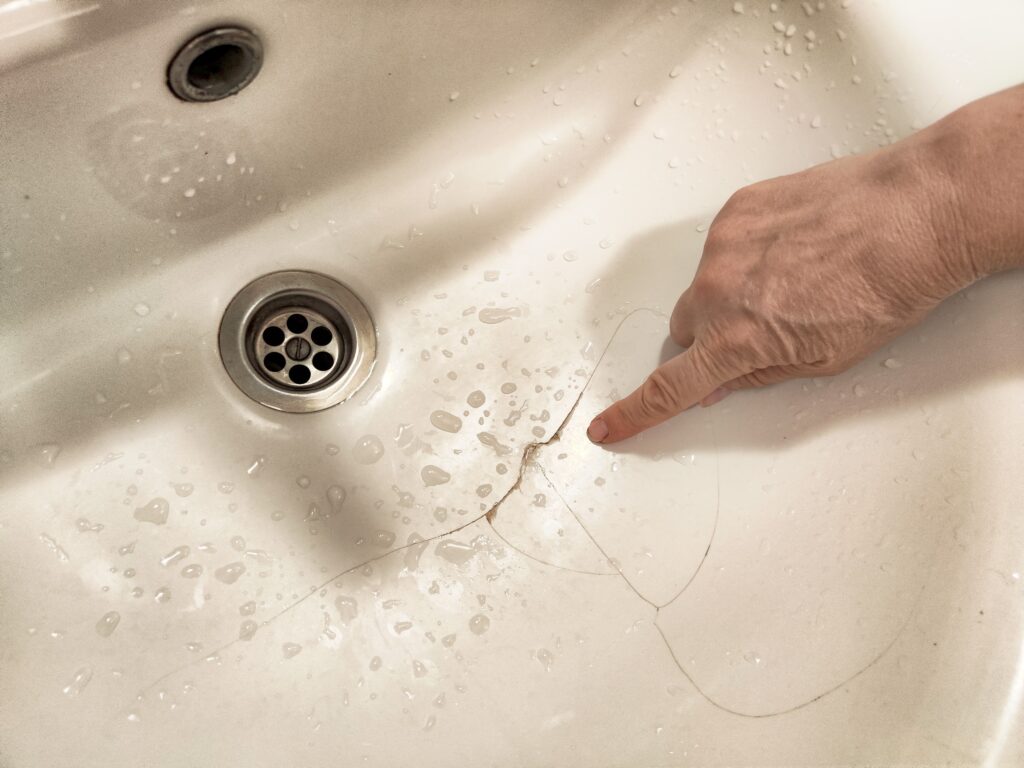
Why Cultured Marble Vanity Tops Crack Around the Sink Bowl
Cultured marble is a cast polymer material, crushed marble or limestone aggregate mixed with resin and poured into a mold with a gelcoat surface finish. That manufacturing process creates a predictable weak point, and a handful of common stress factors turn that weak point into a visible crack over time.
The Sink Bowl Area Is the Thinnest Section of the Molded Countertop
To form the sink bowl depression, the mold has to taper the material down to its thinnest cross-section anywhere on the countertop. That thin section simply has less material to absorb stress compared to the flat, thicker areas of the slab, which is why cracks consistently originate at the bowl radius rather than in the middle of the counter.
Impact Damage From Dropped Hair Tools and Bathroom Accessories
Hair dryers, curling irons, glass containers, and jewelry are regularly set down or dropped directly around the sink bowl. A hard impact at that already-thin section is far more likely to produce a crack than the same impact would on a thicker section of countertop elsewhere.
Thermal Stress From Hot Styling Tools and Water Near the Bowl Edge
Hot curling irons or flat irons set down near the bowl edge, along with repeated exposure to hot water at the bowl itself, create localized expansion and contraction that differs from the surrounding, more insulated sections of the countertop. Repeated thermal cycling at that thin point gradually stresses the material.
Cabinet Support or Leveling Issues Beneath the Vanity Top
A vanity top that was not fully supported and shimmed during installation can flex slightly under normal use if the cabinet below is not perfectly level. That flexing concentrates additional stress precisely at the thin sink bowl section, adding to the load the material has to absorb over years of use.
Gelcoat Weakening From Harsh Bathroom Cleaning Chemicals Over Time
Bleach, ammonia, and other harsh bathroom cleaners gradually break down the surface gelcoat, leading to fine crazing that weakens the material before a physical stress event causes a crack to form and spread visibly from that already-compromised point.
How Professional Refinishing Restores a Cracked Vanity Top
Restoring a cracked cultured marble vanity top through bath vanity top refinishing starts with cleaning out the crack and filling it with a bonding compound formulated for cast polymer material, not a generic household filler. The surrounding area is leveled and blended so the repair does not leave a visible ridge, and a full topcoat is then applied across the entire top, which seals the repaired section and refreshes the rest of the surface in the same visit. Because this process uses the same coating materials as our other surface restoration work, our technicians follow EPA indoor air quality guidance and use commercial ventilation equipment throughout.
Vanity tops are not the only surface that develops this kind of crack. Bathroom and kitchen surfaces built from similar cast polymer or laminate materials show the same wear pattern, which is why countertop refinishing and kitchen countertop refinishing follow the same restoration principles. When a crack has progressed to a larger chip or structural gap, our bathtub crack and chip repair process uses the same filling and blending techniques to bring the surface back to a smooth, uniform finish before the final coating is applied.
Signs Your Vanity Top Needs Professional Attention
- A visible crack radiating from the edge of the sink bowl
- A chip at the counter edge, faucet mounting area, or bowl rim
- Fine hairline crazing across the gelcoat surface
- A dull, worn, or stained finish that cleaning no longer improves
- A vanity top color that no longer matches an updated tub, tile, or shower
Why Baltimore and Washington, D.C. Homeowners Trust Tub Coaters for Vanity Top Restoration
| What We Offer | What It Means for You |
| Licensed MHIC#97786 by the Maryland Home Improvement Commission | Your project is handled by a verified, state-certified contractor |
| Fully Insured (General Liability + Workers Compensation) | Zero financial exposure for you if anything goes wrong on site |
| BBB Accredited Business | Third-party verified track record of customer satisfaction |
| 26+ Years Serving Baltimore, Nottingham, and Washington, DC | Deep regional knowledge and a proven local reputation |
| 130,000+ Successfully Completed Projects | Experience with every surface type, material, and damage condition |
| Same-Day Completion on Most Projects | Your bathroom is restored and ready for use in 24 to 48 hours |
| Available 24/7 for Assessments and Scheduling | We respond quickly to accommodate your timeline |
| Skilled Technicians Using Commercial-Grade Materials | Industrial coatings that outlast any consumer-grade DIY product |
Frequently Asked Questions About Cracked Vanity Tops
Why do cultured marble vanity tops crack near the sink bowl?
The area surrounding the integrated sink bowl is the thinnest section of the entire molded countertop, since the mold has to taper down to form the bowl depression while keeping the surrounding slab relatively thin. This thin cross-section concentrates stress from impacts, temperature changes, and normal settling far more than the flat, thicker sections of the countertop, which is why cracks consistently appear there first.
Is a cracked vanity top a sign of a defective product?
Not usually. Cracking at the sink bowl is a predictable structural pattern in cast polymer vanity tops rather than evidence of a manufacturing defect. The same thin-section stress point exists in nearly every one-piece cultured marble vanity top, which is why this is one of the most common issues homeowners encounter with this material.
Can a cracked cultured marble vanity top be repaired instead of replaced?
Yes. In most cases the crack is a surface-level failure that can be filled, blended, and sealed under a fresh coating rather than requiring the entire vanity top to be torn out and replaced. Professional refinishing restores the surface to a smooth, uniform finish while keeping the existing countertop and cabinet in place.
How is a cracked vanity top professionally restored?
The crack is cleaned out and filled with a bonding compound suited to cast polymer material, then the surrounding area is leveled and blended so the repair does not create a visible ridge or seam. A full topcoat is then applied across the entire vanity top, which both seals the repaired area and refreshes the surrounding surface at the same time.
Does refinishing work on chips as well as cracks?
Yes. Chips at the counter edge, around the bowl rim, or at the faucet mounting area are repaired using the same filling and blending process as cracks, then sealed under the same finishing topcoat so the repaired sections are not visually distinguishable from the rest of the surface.
What causes cultured marble to develop hairline cracks over time?
Hairline cracks often start as gelcoat crazing caused by repeated exposure to harsh cleaning chemicals, which gradually weakens the surface layer before a physical stress event, such as an impact or a temperature swing, causes a visible crack to form and spread from that weakened point.
Can a vanity top crack be caused by how the cabinet was installed?
Yes. If the cabinet beneath the vanity top is not level or the countertop is not fully supported and shimmed at installation, the top can flex slightly under normal use. Over time, that flexing concentrates additional stress at the already-thin sink bowl area and can contribute to cracking.
How long does a professionally refinished vanity top last?
A professionally refinished cultured marble vanity top typically performs well for 10 to 15 years with routine, non-abrasive cleaning, similar to the service life expected from professional bathtub and tile refinishing.
Will a refinished vanity top match the surrounding bathroom fixtures?
Yes. Refinishing allows the color of the vanity top to be matched to its current shade or updated to coordinate with a newly refinished tub, tile, or shower, giving the bathroom a consistent, cohesive appearance.
Can the color of a vanity top be changed during refinishing?
Yes. Color-change refinishing is available for vanity tops just as it is for tubs and tile, allowing an outdated color to be updated without replacing the countertop or the cabinet beneath it.
Is DIY vanity top crack repair a good option?
DIY repair kits typically use generic filler that is not formulated for cast polymer material and often does not bond properly or match the surrounding gelcoat finish. A visible patch or mismatched sheen is a common result, whereas professional refinishing blends the repair into a single, uniform finish across the entire top.
What cleaning products should be avoided on a cultured marble vanity top?
Abrasive powders, scouring pads, and cleaners containing bleach or ammonia gradually wear down the gelcoat surface and contribute to crazing and cracking over time. A non-abrasive liquid cleaner and a soft cloth are sufficient for routine maintenance.
Does Tub Coaters refinish vanity tops in kitchens as well as bathrooms?
Bath vanity top refinishing addresses bathroom vanity units specifically. Kitchen counters facing similar cracking and wear are served through a separate kitchen countertop refinishing process, since kitchen surfaces face different daily stresses such as heat and knife contact.
How soon can I use my vanity top after professional refinishing?
Most refinished vanity tops are ready for light use within 24 hours and full normal use within 48 hours, allowing the topcoat to cure fully before regular contact with water and toiletries.
How do I schedule an assessment for a cracked vanity top?
Call (410) 324-6057 to schedule an assessment for a cracked or chipped vanity top in Baltimore, Nottingham, or Washington, D.C. Our team is available 24/7 to review the damage and confirm scheduling for a professional restoration.
Restore Your Vanity Top Instead of Replacing It
A crack near the sink bowl does not mean a cultured marble vanity top has to be torn out. Tub Coaters restores cracked and chipped vanity tops through bath vanity top refinishing backed by MHIC license #97786, full insurance, 26+ years, and 130,000+ completed projects. Call (410) 324-6057 for a complimentary assessment. Read verified results on Yelp and Angi.