


Why Acrylic Bathtubs Crack at These Specific Spots and What to Do Next
Acrylic bathtubs do not crack randomly. They crack at predictable mechanical stress points, and understanding exactly why reveals what the crack is telling you about your tub. Tub Coaters repairs acrylic bathtubs throughout Baltimore, Nottingham, MD, and Washington, DC with MHIC license #97786, full general liability insurance, and workers compensation coverage. With 26+ years of regional experience and 130,000+ completed projects, our licensed technicians use acrylic-specific flexible filler systems that bond to thermoplastic substrates and move with them, producing permanent repairs where consumer kits repeatedly fail. Verify our credentials and read results on the Better Business Bureau, Yelp, Angi, and Houzz. Available 24/7 throughout Baltimore and Washington, DC. Call (410) 324-6057 today.
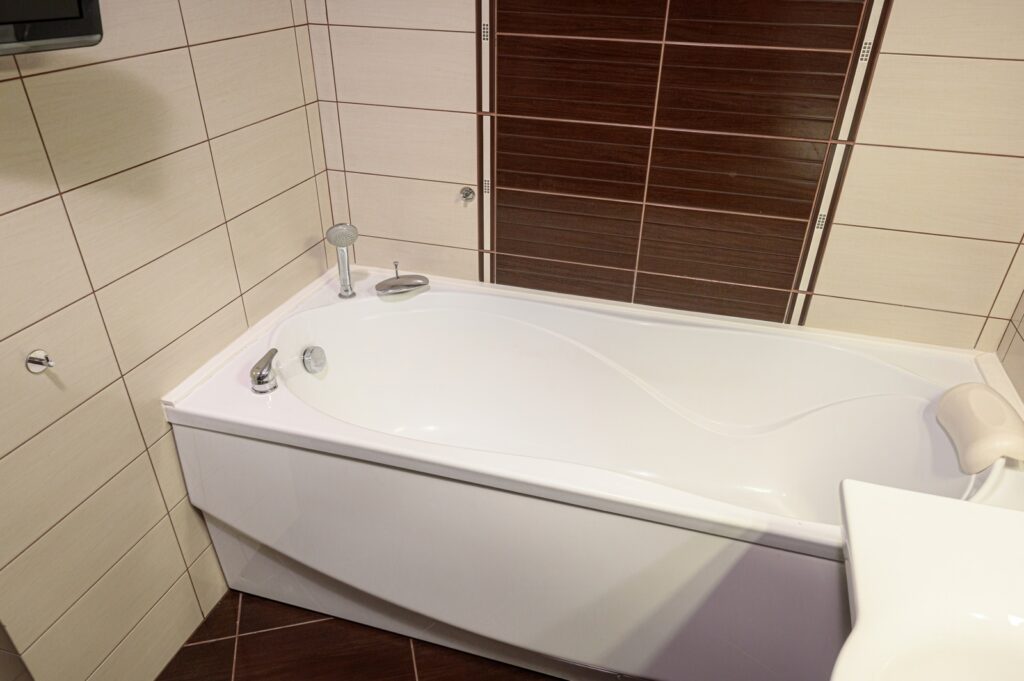
What Acrylic Is and Why It Cracks at Structural Weak Points
Acrylic bathtubs are manufactured from polymethyl methacrylate (PMMA), a solid thermoplastic. Unlike fiberglass composite (which contains glass fiber reinforcement strands) or cast iron (which is rigid and dense), acrylic is a homogeneous thermoplastic that flex-loads evenly across its surface but concentrates mechanical stress dramatically at geometric discontinuities.
A geometric discontinuity is any point where the tub’s uniform surface changes: a hole cut for hardware, a corner bend, a transition from tub floor to wall, or a drain fitting mount. At these points, the even distribution of mechanical load across the flat tub surface breaks down. Load concentrates at the discontinuity edges. Every time someone uses the tub, this concentrated stress loads the same specific points. Over years of accumulated loading cycles, these points develop fatigue cracks that grow with continued use.
This is not a manufacturing defect in most cases. It is the predictable mechanical behavior of thermoplastic materials under sustained cyclic loading at geometric stress concentration points. Understanding this explains why an acrylic tub may show no cracks at all for 15 years and then develop cracks at the drain surround and faucet area within the same year.
The Four Specific Stress Points Where Acrylic Cracks Form
1. The Drain Surround Area
The drain surround is the highest-stress zone on most acrylic tub floors. Two separate loading mechanisms concentrate at this point simultaneously. First, the drain fitting hardware installs through the acrylic with fasteners that apply mounting torque directly to the thermoplastic. Acrylic does not distribute torque loads the way dense cast iron does. The mounting torque creates micro-stress in the acrylic at the drain fitting boundaries.
Second, the drain location sits at the low point of the tub floor where standing water weight concentrates and where occupants step when entering or exiting the tub. This dynamic loading adds to the hardware installation stress at the same point. Hairline cracks at the drain surround typically radiate outward from the fitting edges and grow incrementally with continued use.
2. The Faucet and Showerhead Mounting Area
Faucet and showerhead hardware mounts through the acrylic tub deck using threaded fasteners that apply torque to the thermoplastic at each installation point. Hot water contact with the tub surface at the faucet location creates a temperature differential between the hot inner surface and the cooler outer surface, generating thermal shear stress at the fastener holes. This combination of installation torque and thermal cycling creates stress risers at faucet mounting points that develop hairline cracks over years of use.
3. The Tub Floor Corner Bends
The transitions from tub floor to tub walls, particularly at the corners where multiple geometric changes converge, concentrate flex loading at the bend zones. When occupant weight loads the tub floor, the floor surface deflects slightly. This deflection concentrates tensile stress at the corner bend zones where the floor transitions to the vertical wall. Stress cracks at tub corners often appear as horizontal lines running parallel to the tub floor at the base of the tub walls, precisely where this geometric stress concentration is highest.
4. The Tub-to-Wall Transition in Combination Units
One-piece acrylic tub-shower combination units develop stress cracks at the zone where the tub section transitions to the shower wall section. This transition zone experiences both the weight loading of the tub section and the thermal cycling of the shower section during use. The discontinuity in surface geometry at this transition creates a stress concentration zone that develops cracks over the life of the unit.
Why Acrylic Crack Locations Matter for Repair
A crack at a drain surround tells our technician the mounting torque combined with dynamic loading created fatigue failure at a hardware installation stress riser. A crack at a faucet tells us thermal cycling at a hardware fastener point created fatigue. Corner cracks tell us the floor deflection load concentrates at the floor-wall geometric transition. Each location suggests a specific mechanism.
This matters because addressing the crack alone without understanding the loading mechanism that created it means the same loading will continue at the same location after repair. Our assessment includes evaluating whether any repair measures beyond surface filler can reduce ongoing stress at the repair location, such as improved subfloor support beneath the tub floor if inadequate support is contributing to floor deflection.
Warning Signs of Worsening Acrylic Crack Damage
- Crack length increases over weeks or months, confirmed by periodic photographs at consistent distances and angles
- New hairline cracks appear adjacent to or branching from the original crack, indicating stress propagation into surrounding undamaged material
- The crack edges feel slightly raised or separated from the surrounding surface, indicating moisture has begun lifting the acrylic at the crack boundary
- The surface around the crack feels soft or spongy when pressed, indicating subsurface moisture has weakened the material bond beneath the visible surface
- Water appears in the crack channel after draining the tub, indicating the crack penetrates fully through the tub wall rather than only partway through
- Staining appears on the ceiling or wall below the bathroom above, indicating water has penetrated through the tub floor to structural materials below
Any of these signs warrants professional assessment without further delay. The earlier in the crack progression that professional repair occurs, the more straightforward and contained the repair scope.
What Happens When Acrylic Cracks Go Unrepaired
An unrepaired acrylic crack does not stabilize. Each bathing session adds stress to the crack tip through flex loading and thermal cycling. Moisture enters the crack wick beneath the surrounding intact surface, weakening the material bond around the crack. The crack length increases and subsurface delamination expands with each use.
When crack progression allows consistent water penetration to the space beneath the tub, structural materials in Baltimore and DC homes face moisture damage in a confined, dark space with limited air circulation. Our related blog on why fiberglass bathtub cracks keep getting bigger explains similar progression mechanisms for fiberglass fixtures and the structural consequences that develop when cracks reach the stage of subfloor moisture contact.
Why Consumer Acrylic Repair Kits Do Not Produce Lasting Results
Consumer repair kits use rigid filler formulations incompatible with acrylic’s thermoplastic behavior. Acrylic expands and contracts with temperature changes during each bathing session. It deflects under occupant weight at every use. Rigid filler bonded to a surface that moves this way fails at the bond interface between the filler and the surrounding acrylic. The repair cracks again, typically within one bathing season.
Our blog on the impact of improper cleaning on fiberglass surfaces explains related reasons why consumer-grade products consistently produce inferior results compared to professional systems on these flexible bathroom surfaces.
How Professional Acrylic Crack Repair Works
Professional acrylic tub repair from Tub Coaters uses commercial-grade two-part flexible filler systems formulated with chemical compatibility for acrylic thermoplastic substrates. These systems accommodate the thermal expansion, contraction, and flex loading that acrylic undergoes during normal use, preventing re-cracking from the material incompatibility that causes consumer kit failures.
- Assessment: Each crack location is evaluated for type, extent, and contributing mechanical factors.
- Surface preparation: The crack channel and surrounding area receive thorough cleaning, including removal of any previous repair material.
- Flexible filler application: Acrylic-compatible flexible filler applies in controlled layers to the crack channel with appropriate curing between layers.
- Surface leveling: Progressive sanding creates smooth surface continuity between the repaired crack and undamaged surrounding acrylic.
- Color matching: The tub’s specific color receives careful evaluation for accurate topcoat formulation.
- Professional topcoat application: Color-matched topcoat applies via HVLP spray equipment for factory-quality results.
- Curing: Surfaces are ready for light use in 24 hours and full bathing in 48 hours.
For acrylic tubs with multiple crack locations alongside overall surface yellowing or wear, combining crack repair with full bathtub refinishing and reglazing creates a uniformly fresh surface in a single project visit. For our comparison of acrylic vs fiberglass crack mechanics, our guide on can a leaking fiberglass or acrylic tub be repaired provides additional context on the repair-or-replace decision for acrylic fixtures.
Local Context: Acrylic Fixtures in Baltimore and DC Homes
Acrylic bathtubs became standard in Baltimore County, Prince George’s County, and throughout the DC metro region in residential construction from the 1980s through the 2000s. Many of these fixtures are now 25 to 45 years old, well within the range where stress concentration fatigue begins producing cracks at the predictable locations described above. The region’s WSSC water supply creates additional thermal cycling stress at faucet and drain hardware mounting points from the mineral content that promotes scale buildup at hardware connections.
Tub Coaters serves Baltimore, Washington, DC, and all surrounding communities. The Maryland Home Improvement Commission requires MHIC licensing for all residential improvement contractors. Verify any contractor’s license status through the MHIC database before authorizing acrylic tub repair work on your property.
Why Baltimore, Nottingham, and DC Homeowners Choose Tub Coaters for Acrylic Tub Repair
| What We Offer | What It Means for You |
| Licensed MHIC#97786 by the Maryland Home Improvement Commission | Your project is covered by verified, state-certified expertise |
| Fully Insured (General Liability + Workers Compensation) | Zero liability for you if anything goes wrong on site |
| BBB Accredited Business | Third-party verified track record of customer satisfaction |
| 26+ Years Serving Baltimore, Nottingham, MD, and Washington, DC | Deep regional knowledge and a proven local reputation |
| 130,000+ Successfully Completed Projects | Experience with every acrylic fixture type, crack location, and damage severity |
| Acrylic-Compatible Flexible Filler Systems | Materials engineered to bond to thermoplastic and move with it during normal use |
| Same-Day Completion on Most Projects | Your bathroom returns to service in 24 to 48 hours |
| Available 24/7 for Assessments and Urgent Repairs | We respond when it matters most, any time of day or night |
Frequently Asked Questions: Why Acrylic Bathtubs Crack at Specific Spots
Why do acrylic bathtubs crack at specific locations rather than randomly?
Acrylic bathtubs crack at predictable locations because thermoplastic materials concentrate mechanical stress at points where geometry creates load concentration. The drain surround, faucet mounting area, corner bends, and tub-to-wall transition zones all represent structural discontinuities where flex loads cannot distribute evenly across the surface. At these points, every bathing session delivers concentrated stress to the same location repeatedly. Over years of use, the cumulative stress exceeds the fatigue tolerance of the acrylic at those specific points. This predictable pattern means an acrylic crack’s location tells you a great deal about what caused it.
What causes cracks around the drain on an acrylic bathtub?
Drain surround cracks on acrylic bathtubs result from two combined stress sources. The drain fitting hardware creates hardware installation torque that loads the acrylic at the mounting point. Additionally, the drain surround sits at the low point of the tub floor where water weight concentrates and where occupants step when entering or exiting, creating sustained mechanical loading during every use. The acrylic at the drain surround therefore experiences both hardware installation stress and repeated dynamic loading from daily use, making it the highest-stress zone on most acrylic tub floors.
Why do acrylic bathtubs crack near the faucet area?
Faucet and showerhead hardware mounts through the acrylic tub surface using fasteners that apply torque directly to the thermoplastic. Acrylic does not absorb torque loads the way cast iron does. The mounting torque creates stress risers in the acrylic at the fastener locations. Temperature cycling from hot water contact with the tub surface at faucet locations adds thermal stress to the mechanical hardware stress. Over years, the combined loading at these installation points produces hairline cracks that radiate from the fastener holes.
What makes acrylic tub cracks different from fiberglass tub cracks?
Acrylic is a solid thermoplastic material without the fiber reinforcement that fiberglass composite contains. Fiberglass has glass fiber strands that resist crack propagation across fiber orientations. Acrylic has no such resistance: once a crack begins, it propagates through the homogeneous thermoplastic with less resistance than a fiberglass composite crack encounters. Acrylic also has different flexibility characteristics than fiberglass. This means acrylic crack repair requires filler systems with different chemical compatibility than fiberglass repairs, and that consumer repair kits designed for fiberglass do not perform appropriately on acrylic substrates.
Can acrylic bathtub cracks be repaired without replacing the tub?
Yes. Most acrylic bathtub cracks respond to professional repair using acrylic-compatible flexible filler and topcoat systems without fixture replacement. The key requirement is using materials formulated for thermoplastic substrates with appropriate chemical compatibility and flexibility characteristics. Consumer-grade rigid filler materials, including those marketed for acrylic repair, typically fail because they cannot accommodate the thermal expansion and contraction that acrylic undergoes. Professional repair using commercial-grade acrylic-specific materials creates permanent results that last as long as the surrounding tub surface.
What happens if an acrylic bathtub crack is left unrepaired?
An unrepaired acrylic crack allows water to penetrate the tub material during each bathing session. Moisture that enters the crack wicks beneath the surrounding intact surface, weakening the bond between the acrylic outer layer and any backing material beneath it. The crack length increases with continued use as the stress riser at the crack tip propagates the fracture incrementally. If the tub sits over a wood subfloor, sustained moisture penetration through the crack reaches subfloor materials where rot and mold develop. An acrylic crack that appears stable when first noticed actively worsens with every bathing session.
How can I tell if an acrylic tub crack is at a stress concentration point or from impact?
Stress concentration cracks at predictable locations including the drain surround, faucet area, tub corners, and tub-to-wall transitions develop gradually with defined crack edges and often show hairline patterns radiating from the concentration point. Impact cracks from dropped heavy objects typically appear as star-burst or irregular fracture patterns at the impact point, which may not correspond to any structural concentration zone. Both types require professional repair. The distinction matters primarily because stress concentration cracks will return if the underlying loading condition continues, whereas impact cracks were caused by an event unlikely to repeat in the same location.
Why do consumer acrylic repair kits fail quickly?
Consumer acrylic repair kits fail because they use rigid single-component filler formulations. Acrylic thermoplastic expands and contracts with temperature changes. It flexes during use under occupant weight. Rigid filler cannot accommodate these movements without cracking at the bond interface with the surrounding acrylic. Professional acrylic repair uses flexible two-part filler systems with chemical affinity for acrylic substrates. These materials expand and contract with the surrounding acrylic rather than resisting its movement. This material compatibility is the fundamental difference between lasting professional repairs and repeatedly failing consumer kit applications.
Can an acrylic tub with cracks at multiple locations be repaired?
Yes. Acrylic tubs with cracks at multiple stress concentration points receive professional repair at each location in a single project visit. All damage points receive appropriate preparation, flexible filler, and color-matched topcoat. When multiple crack locations exist alongside surface yellowing or overall deterioration, combining individual crack repairs with full refinishing of the complete tub surface creates the most visually uniform and comprehensive restoration result. Our technician evaluates the total scope during the initial assessment and recommends the approach best suited to the specific tub’s condition.
Is professional acrylic crack repair safe for Baltimore and DC homes with children?
Yes. Professional acrylic crack repair is completely safe for all households when performed by licensed contractors using commercial ventilation equipment. Household members including children and pets should avoid the work area during active coating application and for four to six hours afterward. After the 24-to-48-hour curing period, all repaired surfaces are entirely safe for regular bathing use, including use by children.
How does hot water cause additional stress on acrylic bathtub crack points?
Hot water contact with acrylic causes the thermoplastic to expand slightly at the water contact surface. The tub’s outer surface remains at room temperature during filling, creating a temperature differential across the tub wall thickness. This differential creates shear stress at the interface between the hot inner surface and the cooler outer surface. At existing crack locations where structural integrity is already compromised, this thermal shear stress adds to the mechanical loading from bathing use. Every hot bath that begins with cold water involves this thermal cycling event at existing crack points, contributing to progressive crack propagation during each use.
Can acrylic bathtub cracks lead to water damage in the subfloor?
Yes. Acrylic bathtub cracks that penetrate fully through the tub wall allow water to pass through the fixture during bathing. Water reaching the space below and around the tub contacts the structural materials beneath the bathroom. In Baltimore and DC homes with wood-frame subfloors beneath bathrooms, this moisture creates conditions for rot in floor joists and subfloor sheathing. The visible crack is a surface sign of a moisture pathway problem. The structural consequences are not visible until they become significant enough to affect floor integrity, at which point the remediation scope is far greater than the original crack repair would have required.
Do acrylic tub cracks affect the tub’s ability to hold water properly?
Most acrylic bathtub cracks do not cause the tub to leak immediately. Hairline and stress cracks allow moisture wicking through the crack channel rather than immediate drainage. The tub holds water adequately for normal bathing. However, the moisture that wicks through the crack during filling and bathing is sufficient to cause subsurface delamination and eventually subfloor moisture damage. Our related guide on whether leaking fiberglass or acrylic tubs can be repaired addresses the specific scenario where cracks have progressed to active leaking through the tub structure.
Can acrylic tub repair be scheduled around my work week in Baltimore or DC?
Yes. Tub Coaters offers flexible Monday-through-Saturday scheduling for acrylic tub repair throughout Baltimore, Nottingham, and Washington, DC. Most repair projects complete within a single morning or afternoon visit. Surfaces require 24 to 48 hours before bathing use after repair completion. Scheduling repair for midweek allows full bathroom access by the weekend, minimizing household disruption from the service timeline.
How do I schedule acrylic bathtub crack repair in Baltimore, Nottingham, or Washington, DC?
Call (410) 324-6057 to schedule your complimentary on-site assessment. Our technician examines each crack location, identifies the type and cause of each crack, determines whether individual crack repairs or combined repair-and-refinishing best serves your tub’s specific condition, and provides a detailed project scope. Most residential acrylic crack repair projects schedule within one to two weeks of the initial assessment. We serve Baltimore, Nottingham, Washington, DC, and all surrounding Maryland and Northern Virginia communities Monday through Saturday.
Get Your Acrylic Tub Crack Repaired Before the Next Bathing Season
Acrylic bathtub cracks at stress concentration points are predictable, diagnosable, and professionally repairable. Tub Coaters provides expert acrylic tub repair and bathtub crack and chip repair throughout Baltimore, Nottingham, and Washington, DC, backed by MHIC license #97786, full general liability insurance, workers compensation, 26+ years of experience, and 130,000+ completed projects. Our acrylic-compatible flexible filler systems produce permanent results that consumer kits cannot achieve. Combine crack repair with full bathtub refinishing for complete tub restoration in a single visit. Read results on Yelp, Trustpilot, and Facebook. Call (410) 324-6057 today for your complimentary acrylic tub crack assessment.